

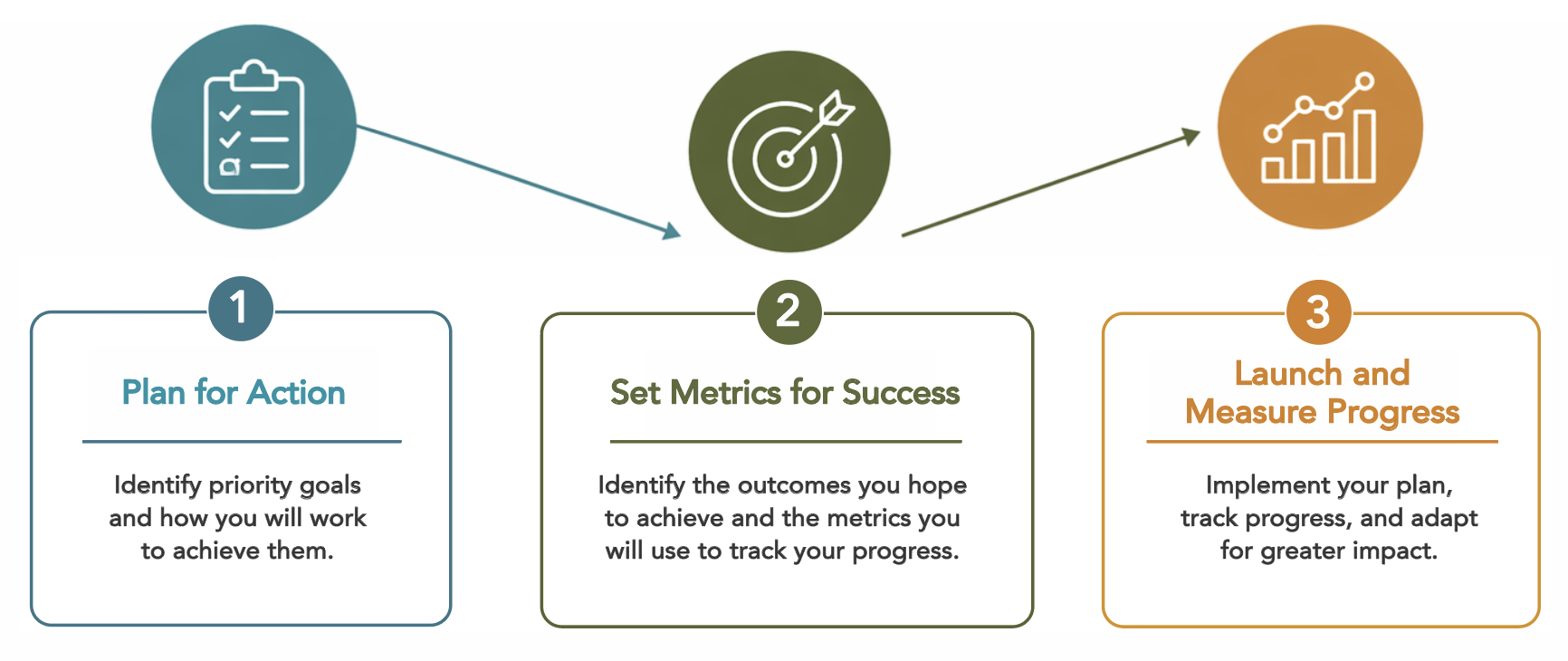
The Transforming stage focuses on action planning, launching and implementing plans to achieve community-identified priorities and tracking progress based on agreed upon metrics for success.
Watch this video from Collective Action Lab, which provides technical assistance for Connected Communities pilots, as you work through Transforming.
(5 ½ min.)
You should anticipate and agree on how you will work together and what work you will do together.

PLANNING FOR ACTION
The Steering Team needs to anticipate and agree on the work ahead, how to accomplish it, and why it’s important. As the Team does this, it will be important to include people who will be impacted and can impact the work.
Two resources can help move you from strategy to action. The first is a Value Proposition Worksheet which will help you get clear on the value of the work and help you talk about it with others.
A second resource is an adaptation of Business Canvas ™ from Strategyzer and is an excellent and accessible tool to help you clearly articulate what you are and are not doing, required resources and first steps.

Action Accountability
Once the Value Proposition Worksheet and Business Canvas are completed, the Steering Team can co-create a work plan that identifies: the actions needed to implement the strategy map, who is responsible for the actions, and target dates to complete them. The Backbone Organization can be a key resource in helping everyone to stay accountable to the work plan and report progress. It can also be helpful to utilize memoranda of understanding and contracts where financial or human resources are exchanged and job descriptions to ensure role clarity and transparent expectations.

SETTING SUCCESS METRICS
Success metrics will help you understand and communicate your impact.
When setting metrics, the framework below can help you understand whether the actions you are taking in your priority areas are reaching people and if they are having individual, economic, and community level impacts. While you may not be able to measure system wide change right away, you can start with the basics - how many, how often, and what was the experience. In other words, utilization, retention/frequency and the experience of those involved in your projects or programs.
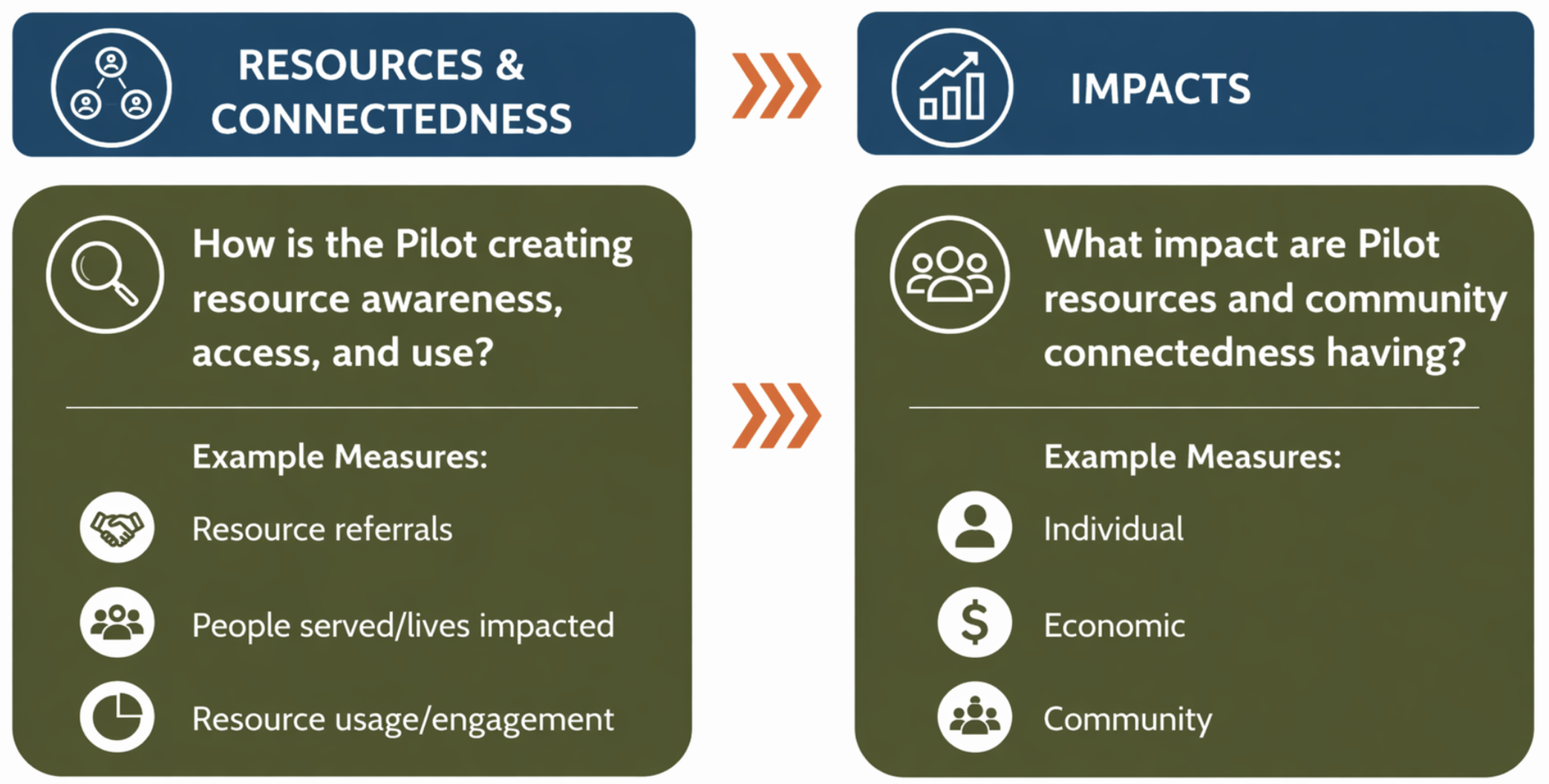

This framework will help you capture the extent to which your work:
1) helps people know about, find, and use resources in the identified priority project areas (including resources that the pilot may have created or enhanced); and
2) whether the resources your project is providing are having a positive impact at individual, community, and/or economic levels.
Note: “resource” is any social, basic-need or healthcare program or service in the pilot community.
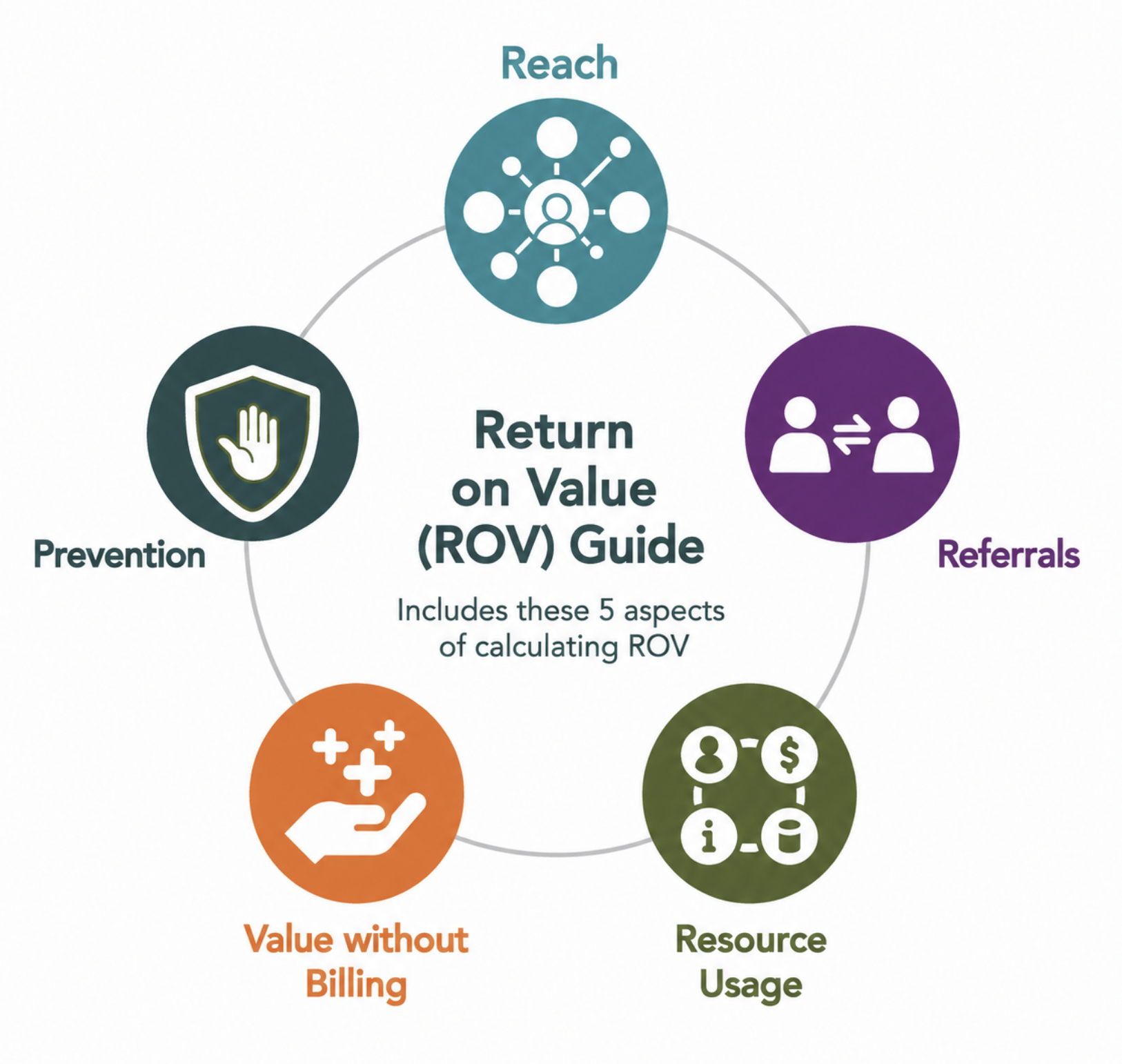
This Return On Value Guide provides detailed guidance in helping you quantify the value and impact of your work.

Watch this video from Collective Action Lab, which provides technical assistance for Connected Communities pilots, as you work through the ROV.
(8 ½ min.)

LAUNCHING AND MEASURING PROGRESS
It’s time to launch your project!
You can launch broadly or in a smaller pilot format.
Considerations:
Is everyone involved clear on their roles and responsibilities?
Are agreements and important policies or procedures in place?
Do we have the staffing capacity for what we are trying to accomplish?
Do we have our infrastructure ready for communications, tracking participation, evaluation and any billing?
Then let’s go!