


The Sustaining stage starts at the outset of the work and includes building enduring partnerships, assuring connections to healthcare revenue pathways and billing capacity, telling your impact story to key audiences who can help you sustain your work (payers, philanthropy, partners), and continually learning and evolving.
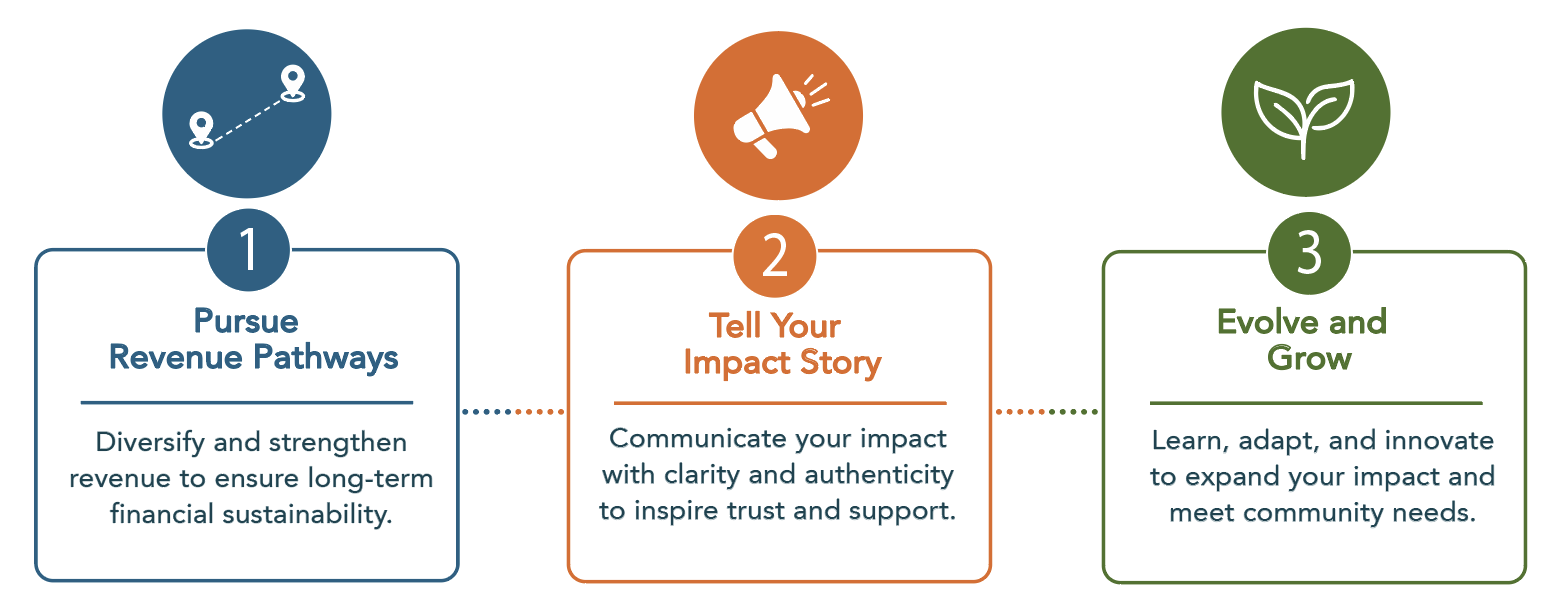

Connected Communities are entrepreneurial and always breaking new ground when developing resources that support people as they age. While innovative resources often don’t start out with existing revenue sources beyond philanthropy, it is critical to link community innovations to existing or potential revenue sources as soon as possible. This might include hospitals, health systems, payers and counties. The CC Systems Guide will support you in preparing for and approaching hospitals, health systems and similar organizations. The foundation you construct will help you sustain your work. Having partners at the table that can link to revenue pathways is key - Some potential pathways are listed below.
Diversify & Strengthen Revenue and Relationship Pathways for Long-Term Sustainability
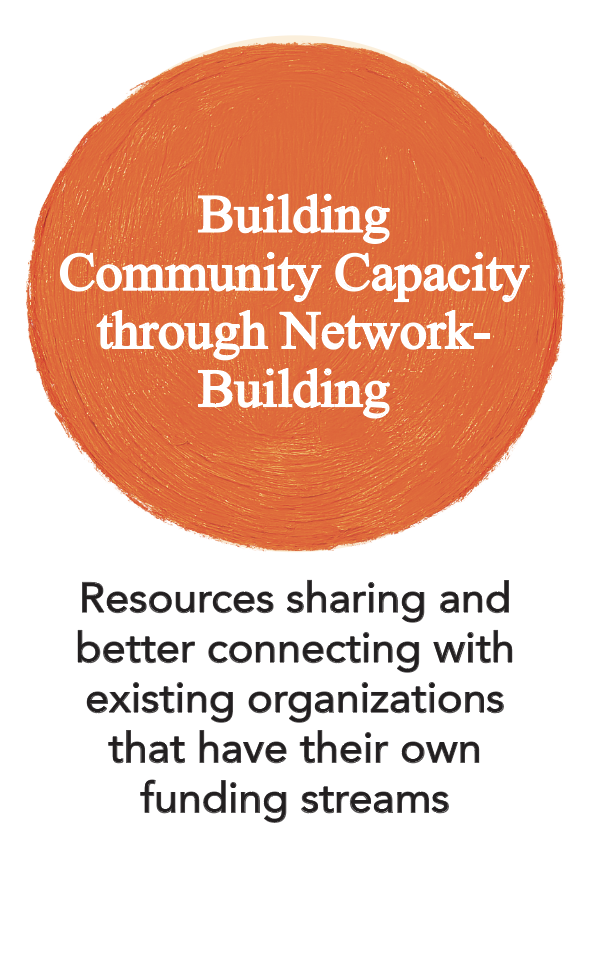
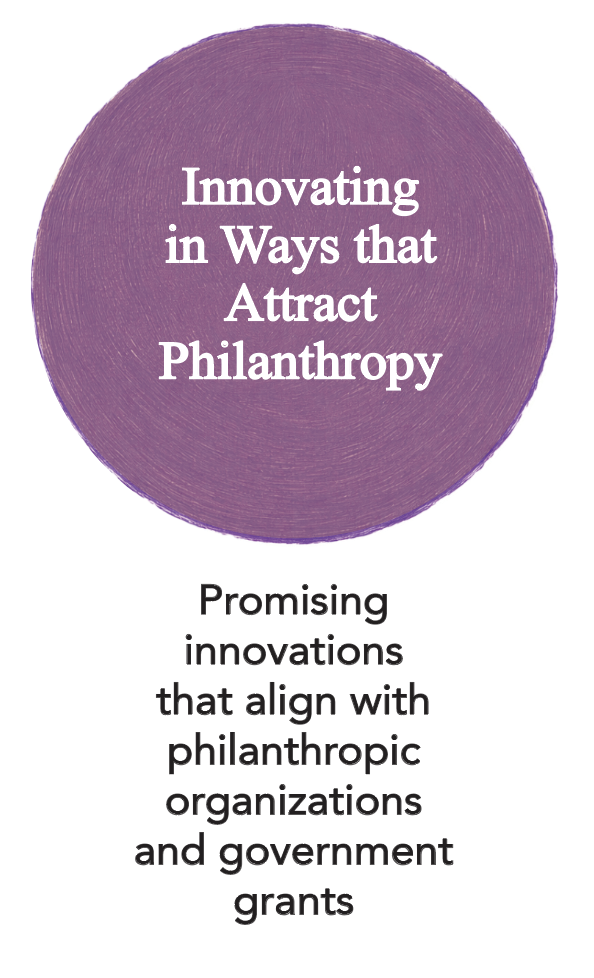
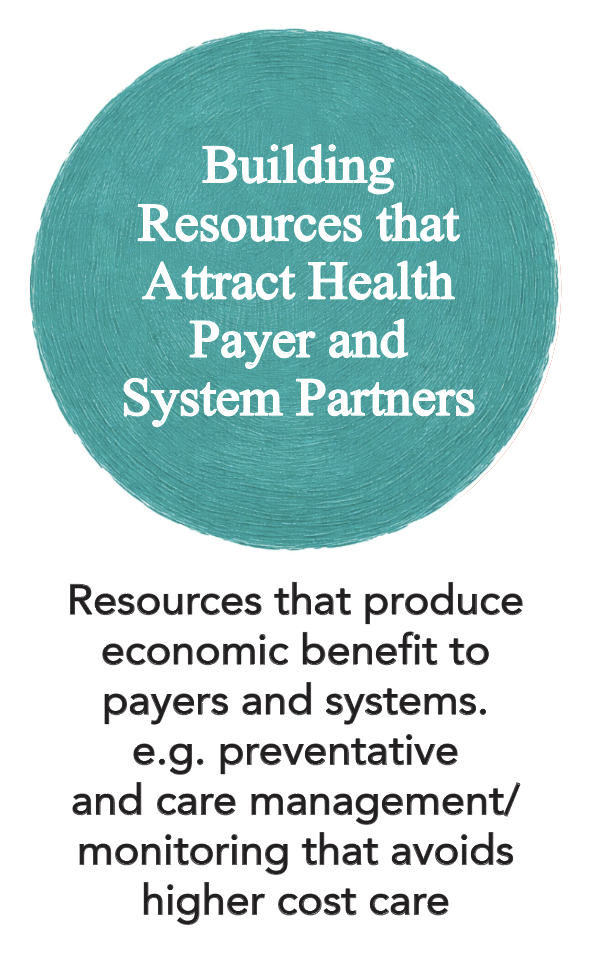
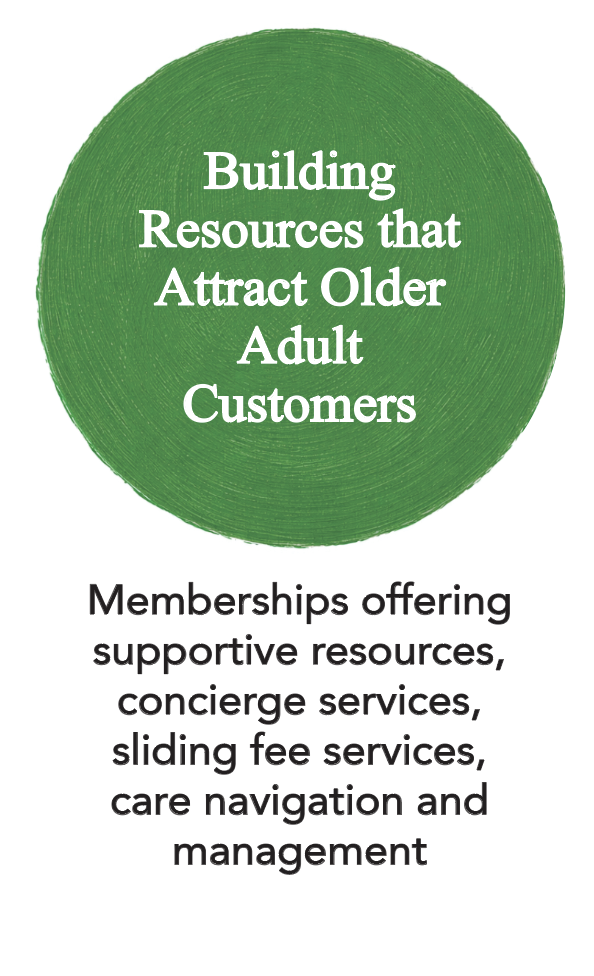
One of the most effective ways to create sustainability is to invest in relationships and capacity to collaborate - focusing on growth and evolution of your community service network. This means building trusted relationships, collaborations, resource sharing and coordinated programming, maximizing and finding novel referral networks. In addition to creating a more seamless version of the resources you already have, you will make your project more attractive to payors, health systems, customers and philanthropy.
The Connected Communities cohort identified elements that lay the foundation to scale for sustainability and payor/funder interest.
Leverage strategic partnerships instead of building programs alone.
Invest in transportation as a gateway service to increase access and participation.
Develop care coordination contracts tied to evidence-based programs.
Create strong bidirectional referral networks internally and externally.
Offer programs that address social isolation and caregiving needs.
Build and activate a structured volunteer infrastructure.
Use resource guides and community education to increase visibility and awareness.
Develop diversified revenue models including private pay, memberships, and contracts.
Invest in branding and storytelling tied to measurable outcomes.
Strengthen data tracking and technology use to demonstrate impact and readiness for investment.


Central to your ability to garner sustaining support is your ability to tell your impact story effectively in words and pictures.


Get creative in telling your story. Collect end user testimonials, partner stories of success, archive images, visualize data, record interviews - in addition to visualizing your measurement framework.
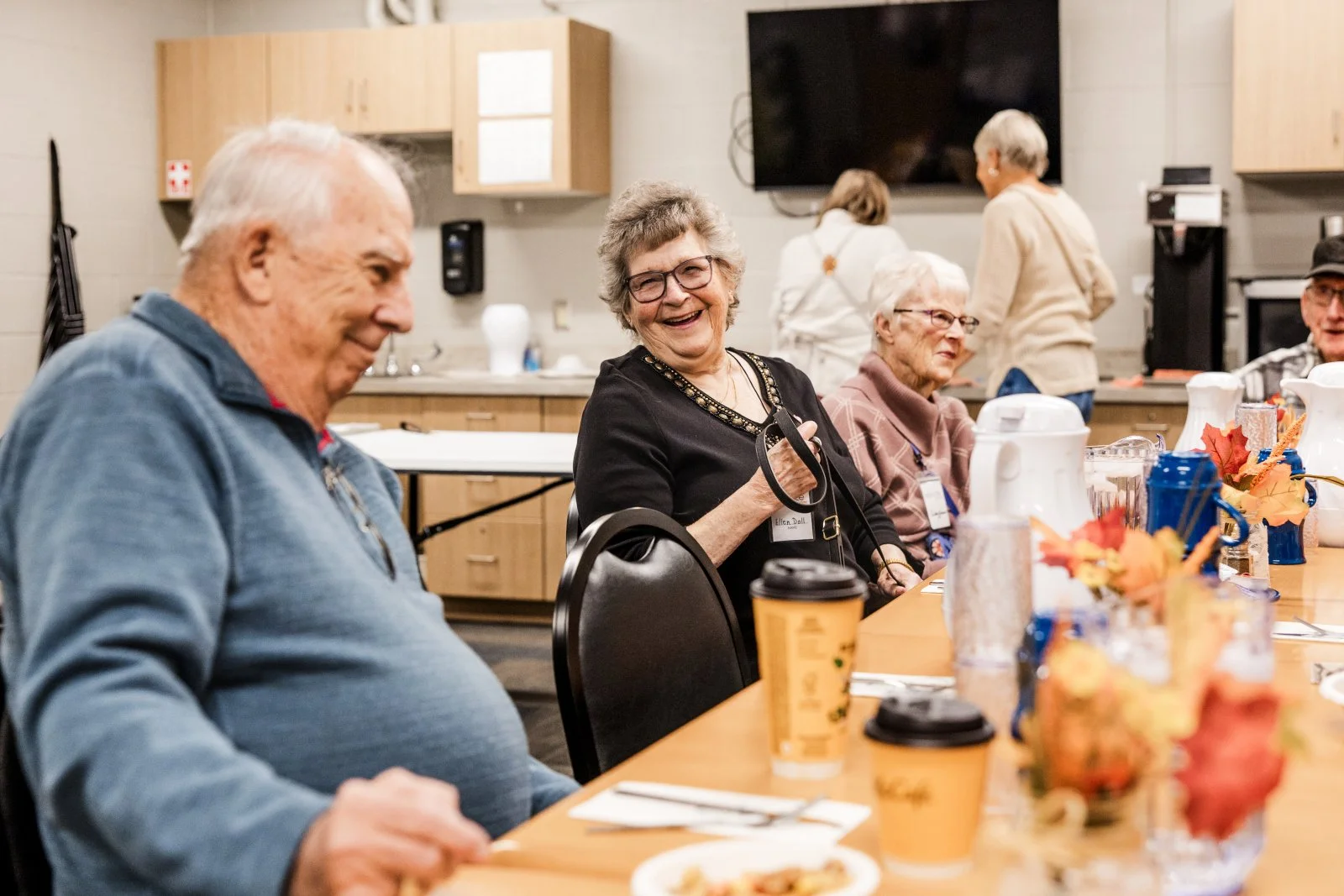
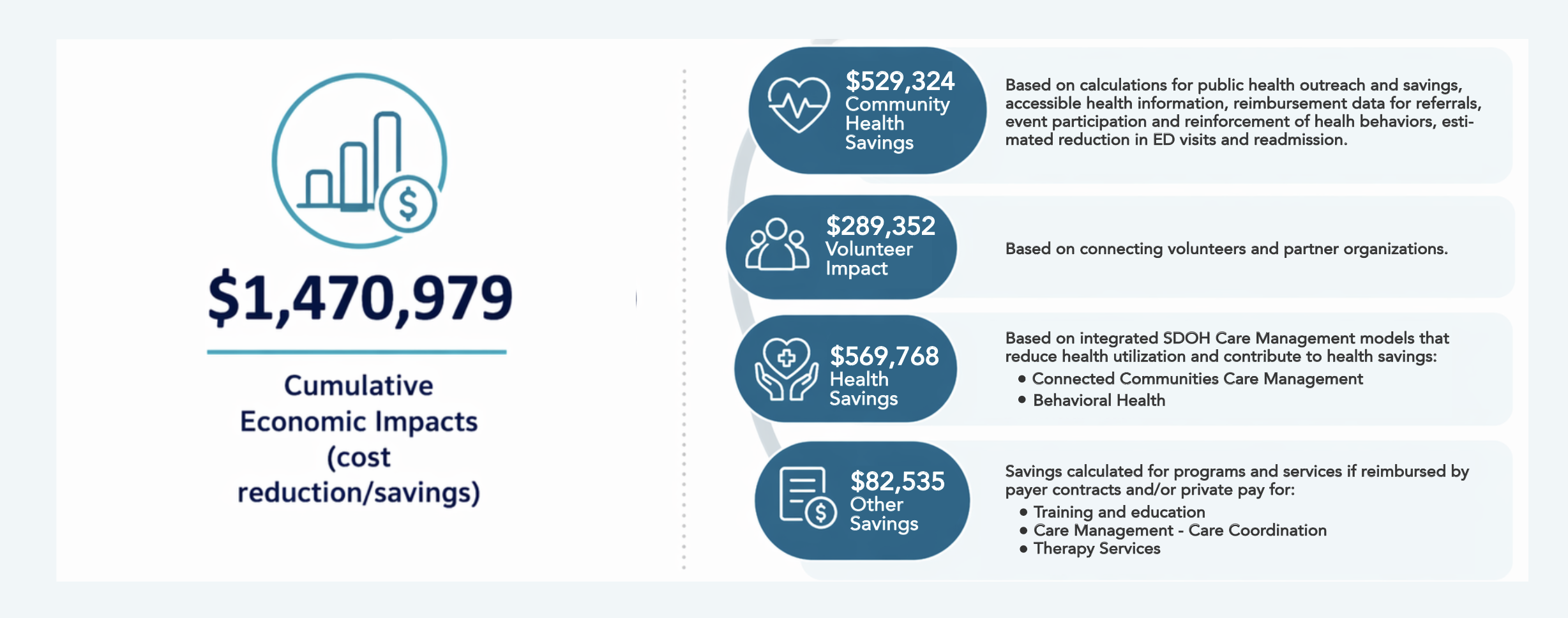
Combine stories and framework data into a dashboard that can be shared with prospective partners, funders and participants to help everyone understand the impact of your collaborative work.
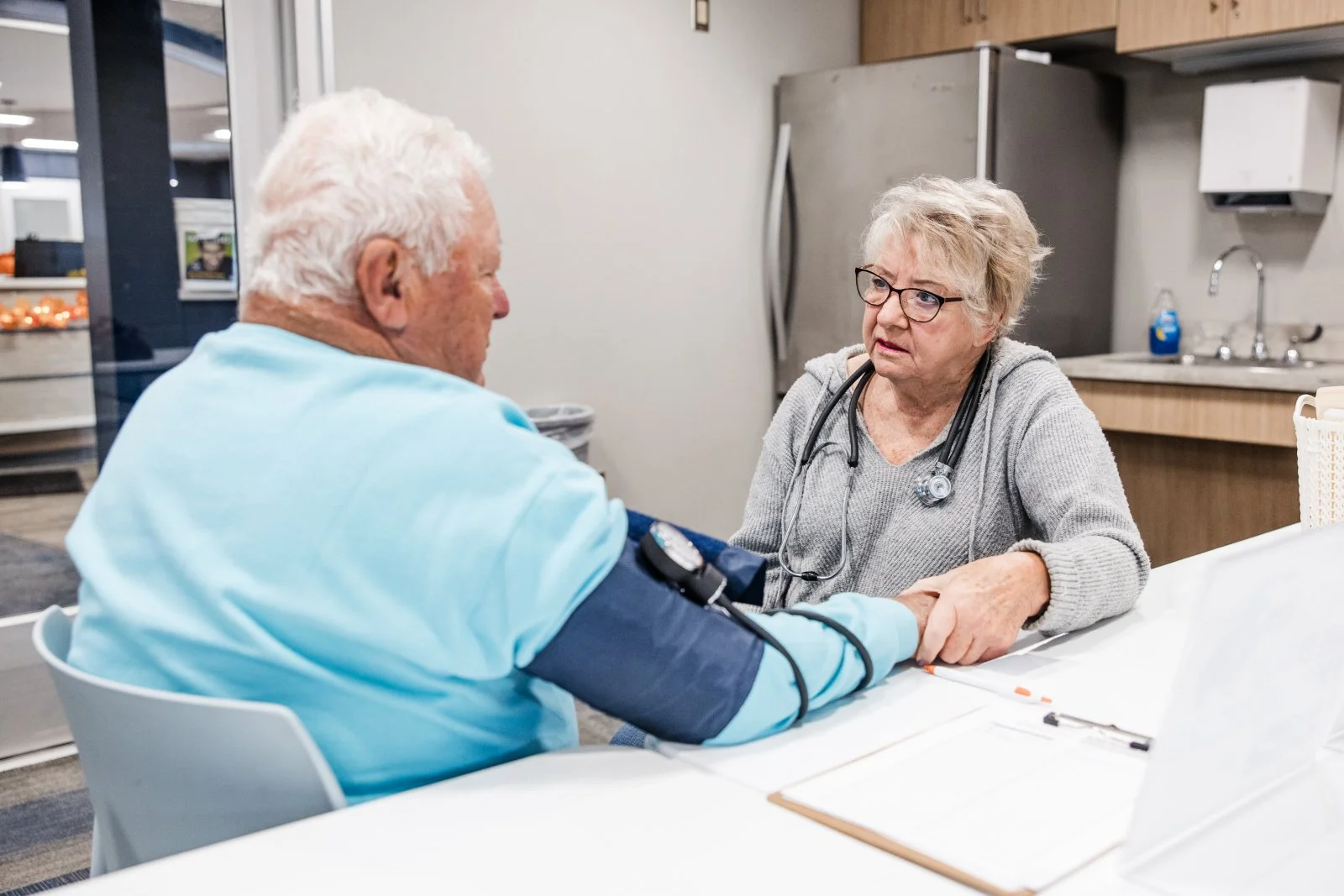

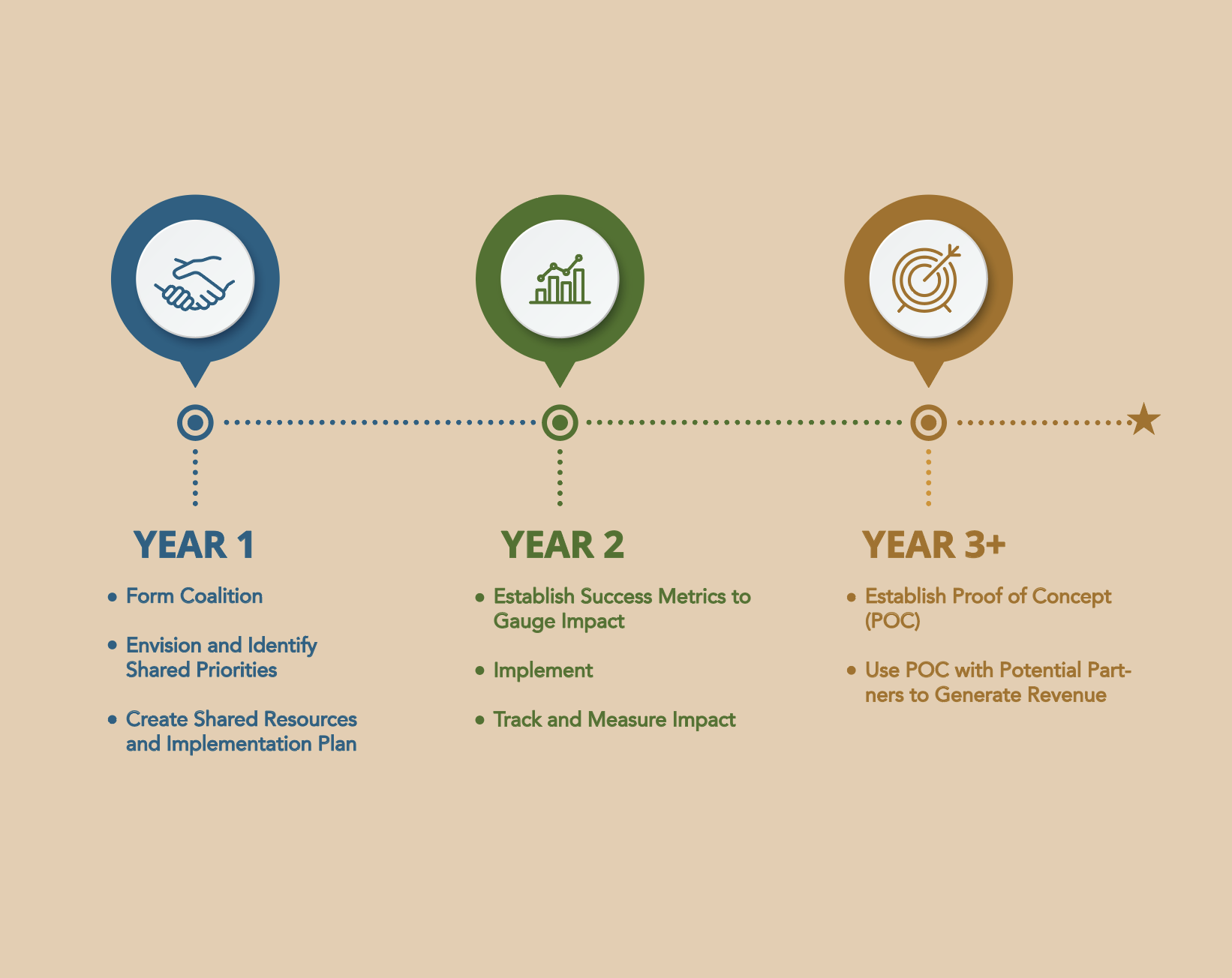


Your programs should evolve.
Returning to that spirit of curiosity again and again, listening to the feedback of participants and partners through evaluation, you will be given opportunities to adjust approaches, add approaches and stop pilots that are taking up resources with little impact.

Here are just a few suggestions from our 2026 Connected Community Co-hort on essential ideas to grow and evolve your programs:
Invest in branding and storytelling tied to measurable outcomes
Develop diversified revenue models (private pay, memberships, fee scales, contracts) to reduce reliance on a single funding stream
Strengthen data tracking and technology use to demonstrate a return on investment (ROI), cost avoidance, and scalability to funders and health systems
Develop care coordination contracts tied to evidence-based programs to create recurring revenue and align with health payer priorities