

Building a Connected Community begins with a desire to make things easier, smoother, more accessible or effective for older adults in your community.
Start by establishing an initial group of stakeholders interested in improving the experience of living and aging in your community, including older adults. You don't need a huge coalition at this point, just several interested people with capacity to reach others, hold space, and listen well. Your job in this phase is to bring people together, explore existing resources, identify needs and set some early shared goals.
Watch this video from Collective Action Lab, which provides technical assistance for Connected Communities pilots, as you work through Forming.
(4 min.)
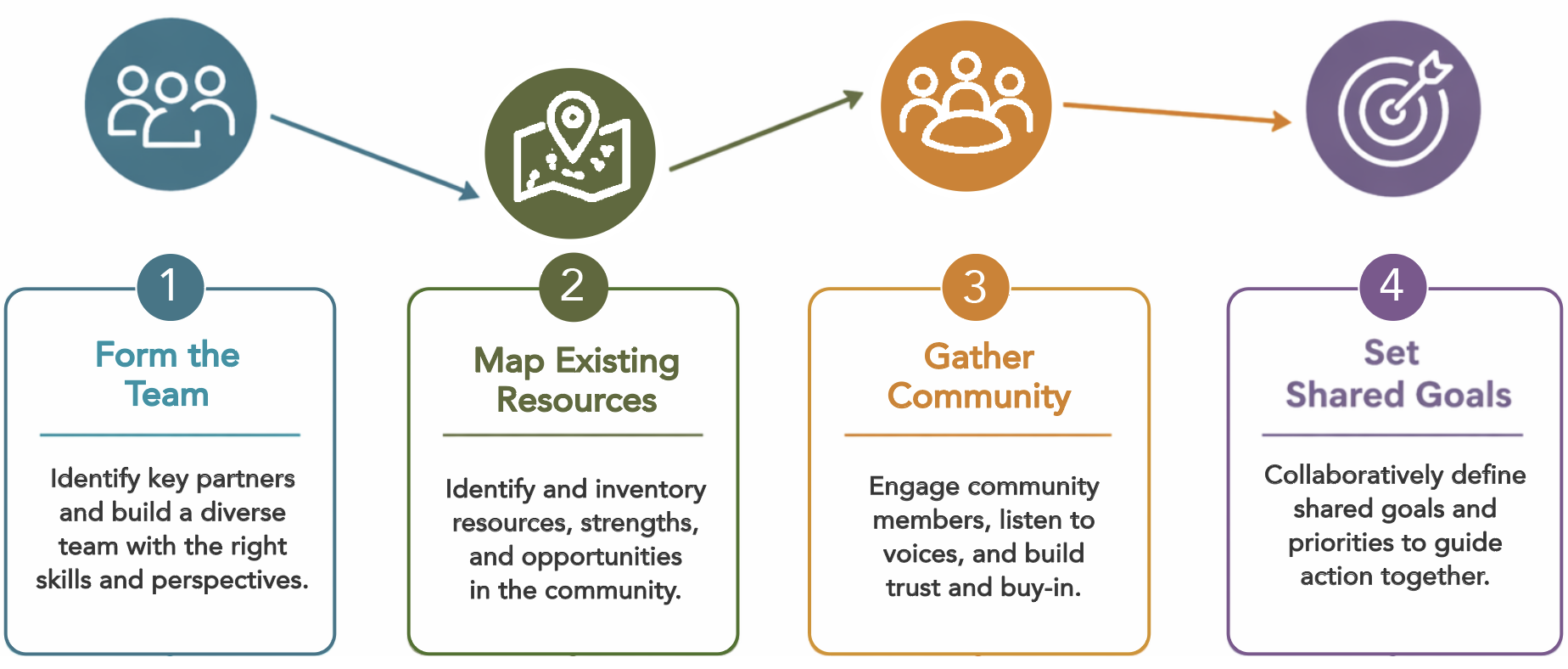
Forming a Connected Community
This first phase consists of building a community coalition that collectively assesses community assets and gaps and identifies priority goals that foster vibrant aging.

FORMING THE TEAM
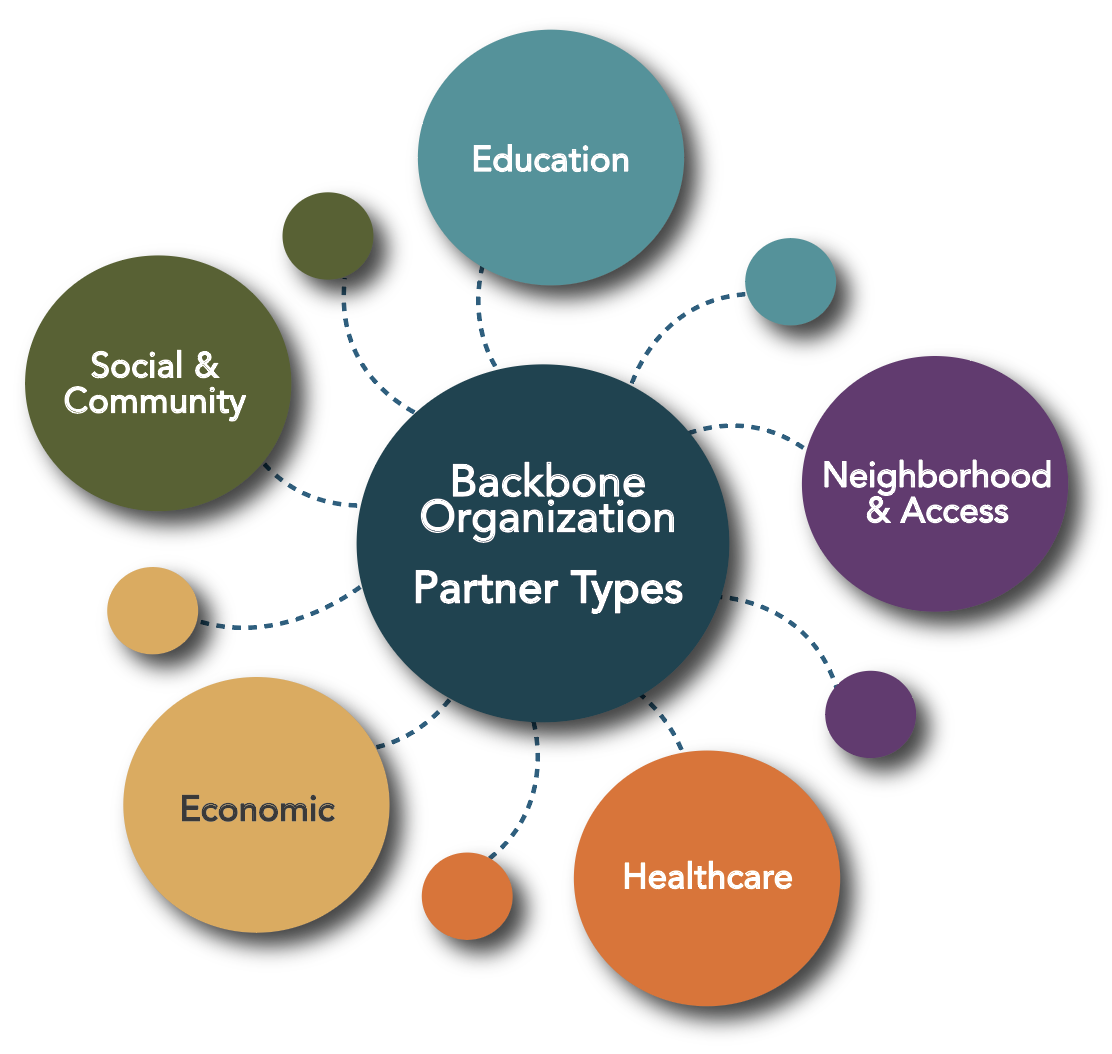
Who do you know? Pull together movers and shakers in your area from a wide spectrum of topic areas, from basic needs to health care, mental health, education, faith and volunteer programs – as well as older adults and caregivers themselves – to create a small Steering Team.
This committee holds smaller early discussions to identify ways to garner interest and shape the focus of your collective work.
Example Steering Team Composition
As you identify Steering Team members, consider whether there are important conveners or opinion leaders who need to be involved at the very beginning. What roles need to be filled at this early stage?
In the beginning, you need networkers, dreamers, hosts, some facilitation skill, and people with knowledge and access to infrastructure and tools (meeting spaces, facilitation skills, contact lists and networks) who can help when it’s time to gather community input.
Regardless of the size of your Steering Team, you will benefit from identifying a Backbone Organization (or co-organizations). This organization is key to sustaining momentum and organizing the work. The backbone organization should have convening ability, excellent connections to other community organizations, capacity to administer programming, and a commitment to work through start-up barriers with creativity and persistence.

MAPPING EXISTING RESOURCES
What do we have? What do we need? An initial resource mapping exercise is central to building your Connected Community and provides a solid first topic for formative stakeholder discussions. The Steering Team should do some sort of early inventory of relevant tools and use it as a foundation for later community discussions. Key questions for assessing resources and gaps are:
What do we have?
What do we need?
Where are needs partially met, or only met in some areas or for some specific demographics?
Who else needs to see this map to add or identify gaps?
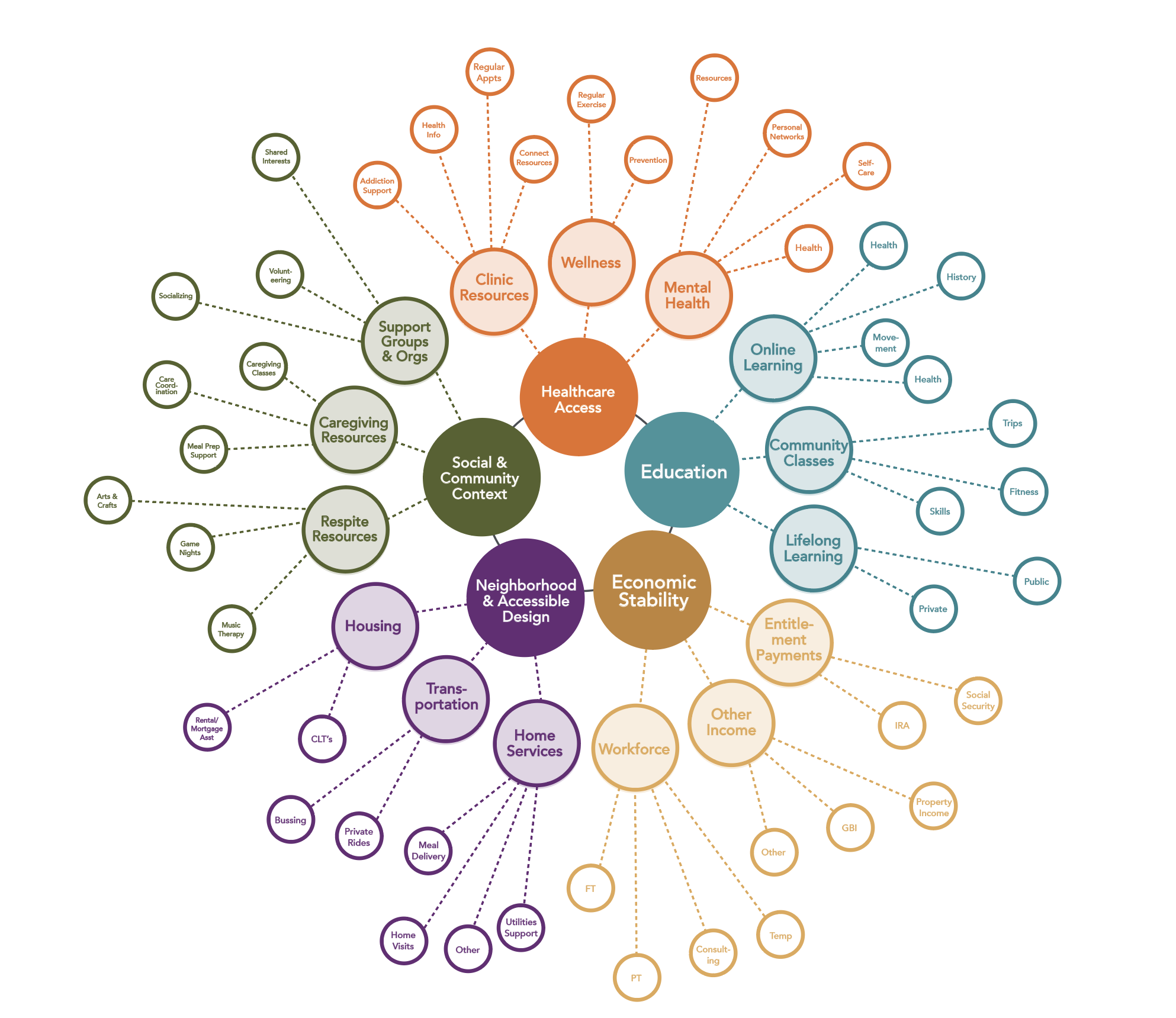
Try the following links below to help you map resources:

CONVENING THE COMMUNITY
What issues are we trying to address? A small, siloed group of people rarely identifies or resolves community-wide challenges effectively.
This question is best answered by asking a wide spectrum of stakeholders to dream of what might be better - and you may get surprising answers! As you identify and invite community members, make sure you ask “who needs to be at the table to inform the discussion about community assets, gaps, and priority issues?”
There are many ways to convene to gather ideas – large stakeholder meetings, targeted conversations at existing meetings or events, even virtual discussions and web-based surveys.
A well facilitated discussion with targeted questions, table level discussion and dynamic ways to share information (verbal report outs, post it note walls, app-based feedback tools like MentiMeter) will help the Steering Team shape a well-informed initial vision while also building momentum, increased involvement and solidified partnerships to move that vision forward.
TOOLS

The focus of the meeting is to ask and answer a few key questions. As you ask and answer the questions, be curious and open and favor co-design where possible:
1. What are the two or three issues that, if addressed well, could most significantly improve the aging experience in our community?
2. What resources already exist? What are we doing well that we can build on?
3. What are the gaps? Where do we need new, creative solutions or more resources?

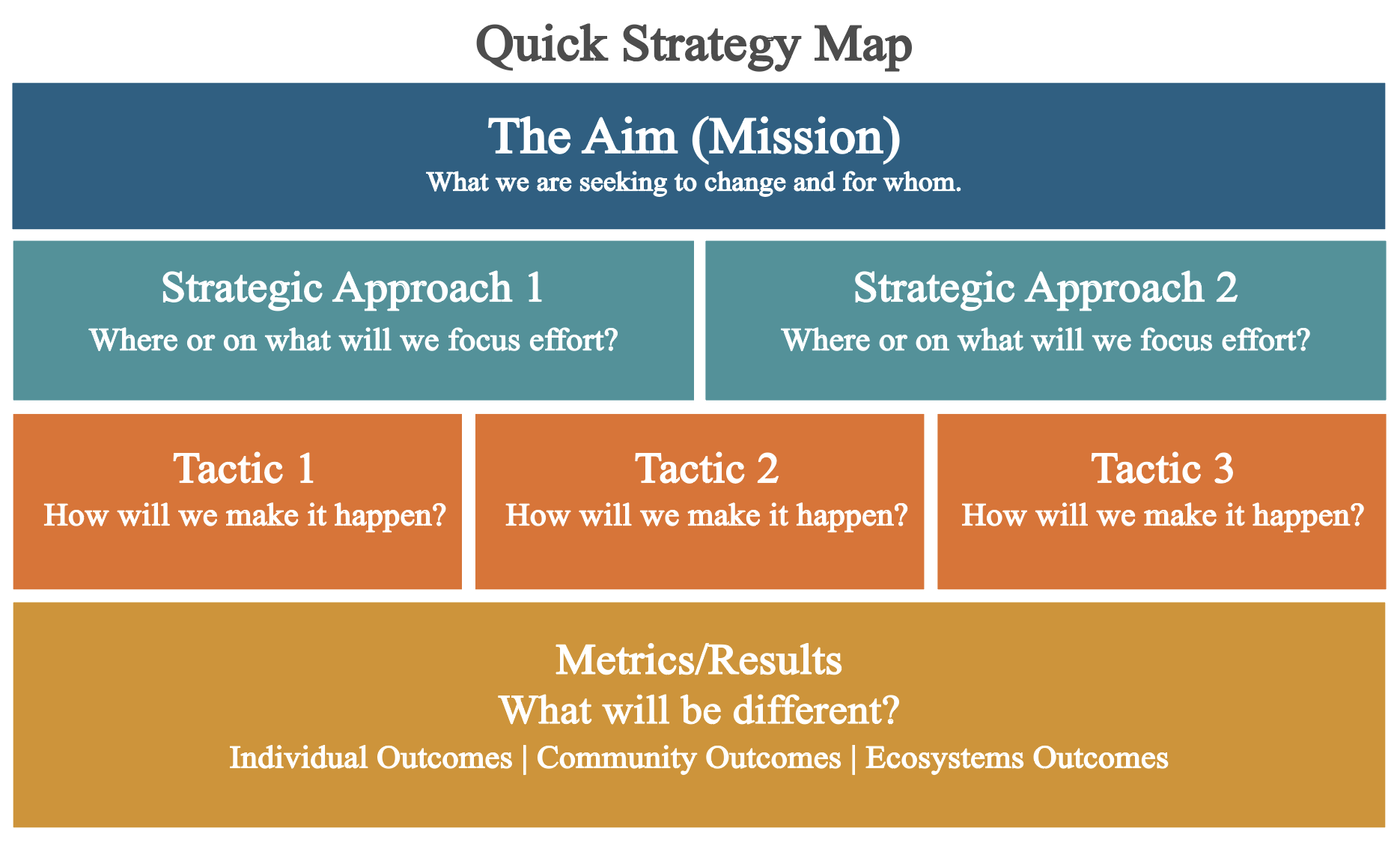
After convening your community, the Steering Team should have a rich set of information to build a Strategy Map that articulates clear priorities, the outcomes you are working towards, and the tactics you will use to achieve the outcomes.
Building a Strategy Map may help you:
Clearly articulate your collective aspiration– name the conditions you are trying to create in a mission statement format.
Clearly articulate the priorities or aims you will focus on to advance your aspiration - identifying goals and tactics you will pursue
Clearly articulate success - outlining desired outcomes and metrics you will use to track progress.